

By Client Executive Marcia Spicer
You probably don’t think about your legacy every day.
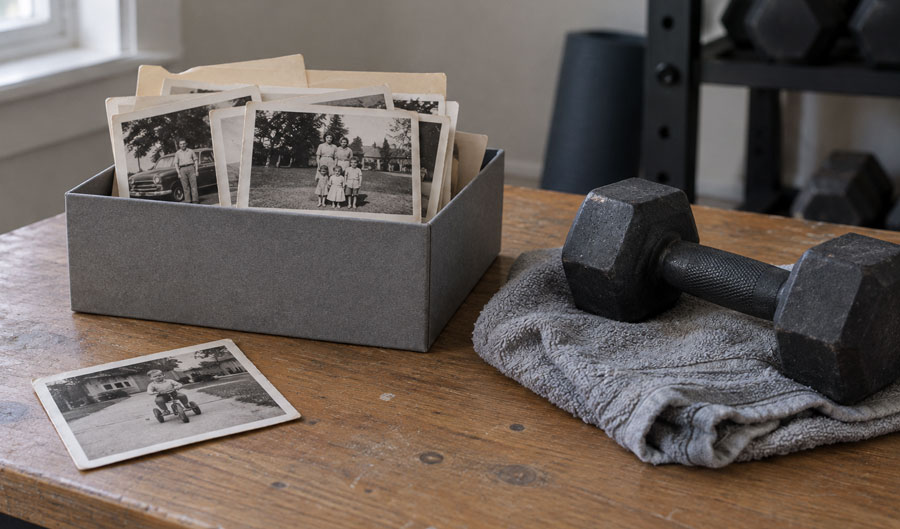
The photographs are in boxes. The records are stored somewhere. Someone still remembers the stories behind them.
Then suddenly, they matter.
An anniversary approaches. A longtime leader retires. A family member passes away. An exhibit is planned. Someone needs a photograph that hasn’t been seen in 30 years.
Suddenly, your legacy is being asked to do some heavy lifting.
The question is whether you’ve exercised it.
Having A Legacy Isn't the Same as Strengthening It
A strong legacy doesn’t exist simply because you possess historical materials.
Photographs become more valuable when they can be found and understood. Documents become more useful when they’re organized and accessible. Stories become more durable when they don’t depend on one person remembering them.
Getting there takes work.
And much like getting into shape, there are different ways to approach it.
You Can Buy the Gym Membership...
There are plenty of tools and services that make preservation more accessible. You can scan photographs, record stories, organize files, and tackle a collection yourself.
Think of it as buying a gym membership.
You have access to the equipment. But access doesn’t guarantee results.
You still have to show up, know what to do, and keep doing it.
Preservation projects often stall for the same reason exercise routines do: life gets in the way.
The scanner sits unused. The boxes remain untouched. The project you meant to tackle this winter becomes something you’ll get to next year.
The intention was real. The capacity wasn’t.
...Or You Can Invest In the Work
There’s a reason people hire personal trainers. They want expertise, structure, accountability, and a greater likelihood of reaching the goal.
Professional archival preservation goes a step further because you’re also investing in the labor required to get there. But getting help doesn’t mean stepping away from your own history. It can mean having a knowledgeable partner alongside you—helping you set priorities, asking the questions that bring stories forward, and guiding the work as you take part.
Someone has to evaluate the collection. Handle fragile or unusual materials. Digitize them appropriately. Organize the resulting files. Add useful information. Make decisions about what deserves attention and, sometimes just as importantly, what doesn’t.
The goal isn’t simply to scan things.
The Goal Is to Create a Resource That Will Be Useful When It Matters
For some families and organizations, a self-directed approach is exactly right. They have the time, knowledge, and desire to do the work themselves.
Others don’t.
The important thing is knowing which one you are.
Train before the big day
No one joins a gym the night before a marathon and expects to be ready.
Legacy works the same way.
The worst time to discover that your history is disorganized, inaccessible, or poorly understood is when you suddenly need it.
Before the centennial.
Before the retirement.
Before the move.
Before the exhibit.
Before the person who knows the stories is no longer there to tell them.
Those are the moments when legacy gets called into action.
Legacy Is a Muscle. Its Strength Comes From What You Do Before You Need It
At Anderson Archival, we help families and organizations do that work: preserving, organizing, and making important collections accessible so they’re ready to serve the next generation. Think of it as having a guide to your history—someone to help you decide where to begin and keep moving forward. You remain part of shaping your legacy, with support along the way rather than a project to face alone.
Because the question isn’t whether you have a legacy.
It’s whether your legacy will be fit for purpose when the moment comes.
Not sure where to begin? Let’s talk about what you have, what matters to you, and how we can help you take the next step. You don’t need to have it all figured out to start a conversation.