


By Client Executive Marcia Spicer
Late last year, I spoke with Stuart Lipscomb, President of Pioneer Outdoor, LLC of Springfield, Missouri, who made a discovery that prompted the need for preservation.
What would you like to share about your family?
We sought to preserve decades of regional and family history for our family company. My great-grandfather pioneered and built the largest tractor dealership in the U.S., innovated training facilities while working with Ford Tractors, and was a national leader in our region on numerous civic ventures.
We worked on two projects together, with different focuses and goals. How did you find Anderson Archival and decide to work with us?
When we presented Chris Juergens [Senior Curator at the National WWI Museum & Memorial in Kansas City, Missouri] with the Skorzeny files, he quickly recommended Anderson Archival as the best place to achieve museum and archival quality reproductions.
What would you like to share about this collection? Why is it important to your family and to history?
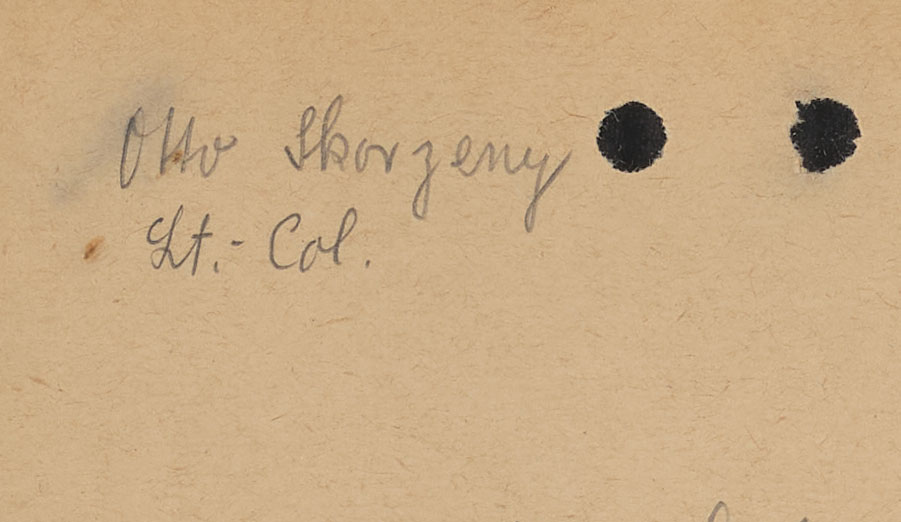
The Skorzeny files are unreleased files by WWII’s most consequential individual as it relates to international law and war crimes. His acquittal in Dachau in 1947 was a turning point in how war crimes would be prosecuted and forced the Allied and world powers to transition to the 1949 trials at Nuremberg.
The files we found were his personal defense files, which granted him an acquittal. They are hand-written by Otto Skorzeny, in his cell prior to trial, and had been lost in an attic for roughly 50 years.
Their preservation was paramount due to the nature of their relevance to both WWII history and the formation of relevant legal frameworks.

“Anderson Archival was delicate and thoughtful throughout the process. They turned a stressful and uncharted situation into a manageable one. Without their help we could not have accomplished the documents’ preservation.”—Stuart Lipscomb
And the film collection?
At the same time, we were able to parlay the work into the preservation of my great-grandfather’s legacy.
We preserved footage on 16mm and 8mm reels which had been buried in storage. Many of the files have significant historical impact in our region of southwest Missouri. Film footage of multiple civic events, that have no other footage, has been preserved and we can bring them to the public at the highest quality possible.
We are also preserving a historic property in southwest Missouri and the materials that Anderson Archival assisted us with are paramount to their preservation.
What surprises did you find in the film collection?
One specific film related to the Ferguson family, of Ford Ferguson and Massey Ferguson tractors, out of England. They have a piece of unearthed footage for their museum because of the work done through Anderson Archival.
What has it been like to work with Anderson Archival?
Anderson Archival was delicate and thoughtful throughout the process. They turned a stressful and uncharted situation into a manageable one. Without their help we could not have accomplished the documents’ preservation.
I would recommend Anderson Archival to anyone attempting to accomplish the same thing that we were, the process was seamless and efficient. With the ability to digitize this type of footage, at broadcast quality, they are clearly regional leaders in their field, and I am thankful we were able to work together.
Where can our readers explore the Skorzeny files?
They will be donated to the National WWII Museum in New Orleans.