

By Principal Historian and Public History Program Lead Morgen Young of Historical Research Associates, Inc.
For more than fifty years, Historical Research Associates, Inc. (HRA) has provided consulting services for public and private clients in historical research, cultural resources management, litigation support, interpretive planning, exhibition development, and historic preservation. HRA partners with government agencies, Tribal nations, historic sites, nonprofit organizations, corporations, and other types of clients in support of a wide range of project types.
I joined HRA in 2016, after running my own historical consulting business for several years. I am a Principal Historian at HRA, and I also lead the company’s Public History Program. I have worked on public history projects for such clients as the National Park Service, U.S. Forest Service, New Mexico Historic Sites, Oregon Historical Society, University of Washington, the Japanese American Museum of Oregon, and the Historical Museum at Fort Missoula.
Much of my work centers on community history, such as collecting oral history interviews and developing exhibitions. With one recent project, I got the opportunity to do both. In 2022 the Virginia Garcia Memorial Health Center hired HRA to help document, preserve, and interpret the history of the organization, in anticipation of its fiftieth anniversary in 2025. The project included two main deliverables: a collection of oral histories and a temporary exhibition at the Oregon Historical Society (OHS) in downtown Portland.
The Virginia Garcia Memorial Health Center
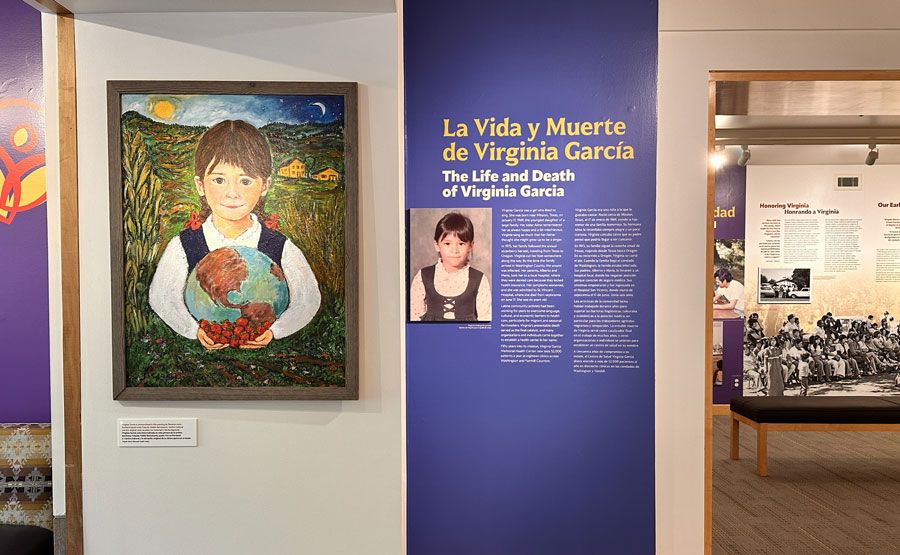
The health center was named in honor of Virginia Garcia, the daughter of migrant farmworkers from Texas. In 1975, her family followed the annual strawberry harvest to Oregon. Somewhere along the way, Virginia cut her foot and by the time the family arrived in Washington County, the wound was infected. Her parents took her to a local hospital, where they were denied care because they did not have health insurance. Her symptoms worsened, and she was admitted to a different hospital, where she died from septicemia. She was six years old.
Latine community activists had been working for years to overcome linguistic, cultural, and economic barriers to health care for migrant and seasonal farmworkers. This preventable death of a child served as the final catalyst, and many individuals and organizations came together to establish a community clinic. The Virginia Garcia Memorial Health Center opened on July 3, 1975, less than three weeks after Virginia’s death.
The health center’s mission has remained the same for more than fifty years: to provide comprehensive, high-quality, and culturally appropriate health care, with a focus on migrant and seasonal farmworkers and all people for whom racism, poverty, and other forces interrupt access to care. The center now sees 52,000 patients a year at seventeen clinics across Washington and Yamhill Counties, Oregon.
For my work with the health center, Virginia Garcia staff identified and connected me with people to be interviewed, including members of the clinic’s founding families and others involved in the early years as well as former and current staff and care providers. Over a six-month period in 2023, I completed fourteen video oral histories that provided many of the exhibition’s stories and themes.
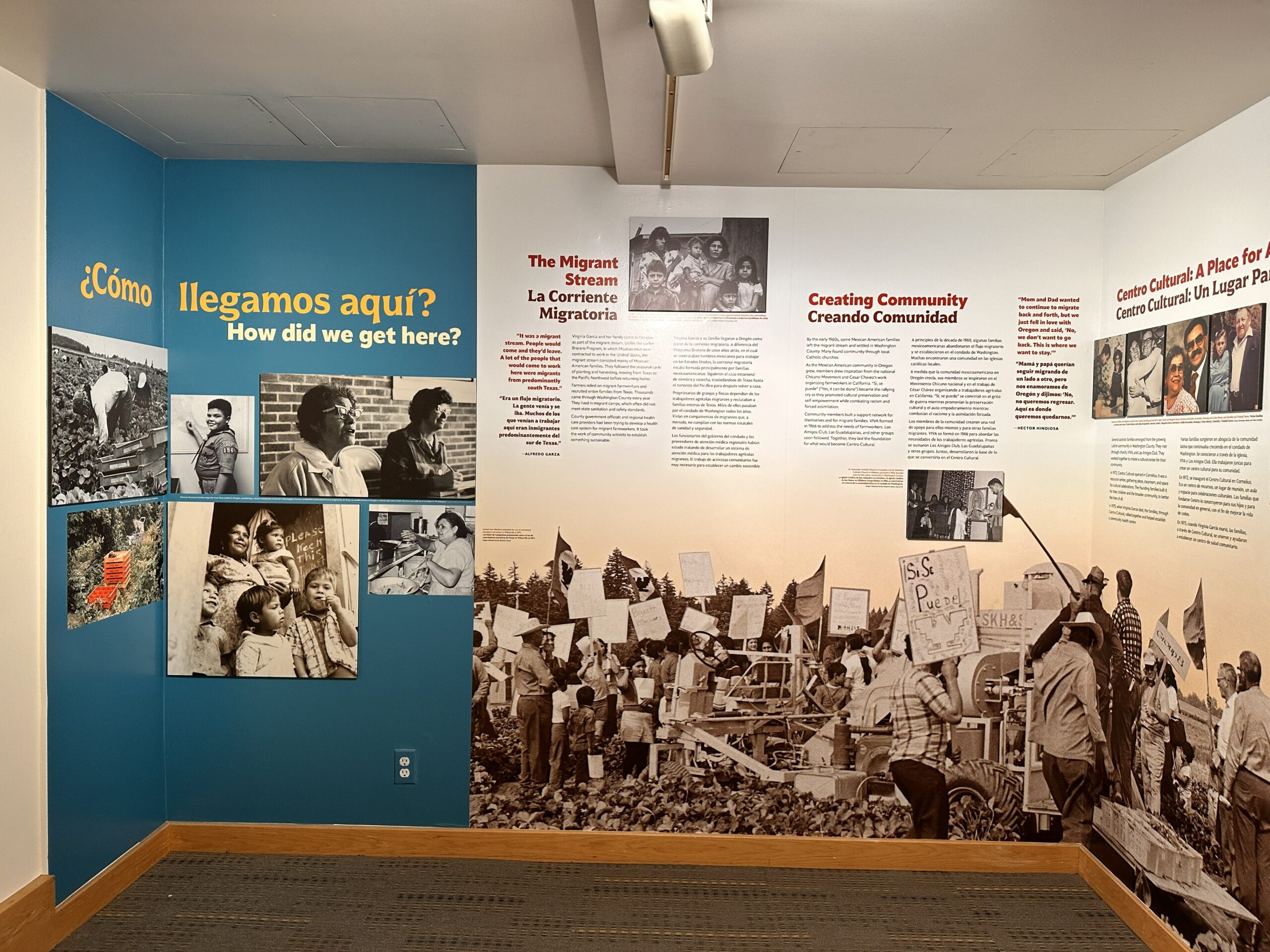
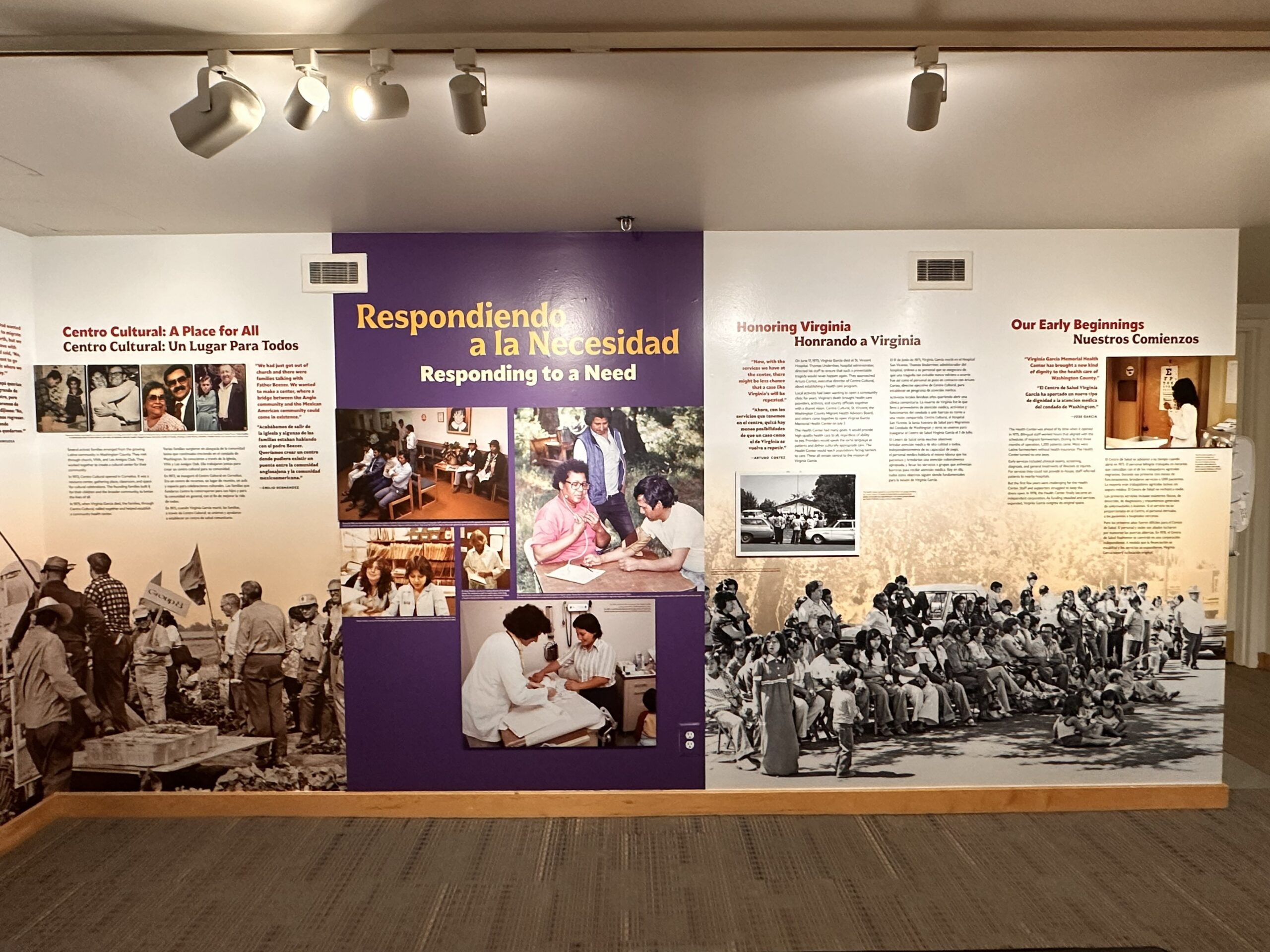
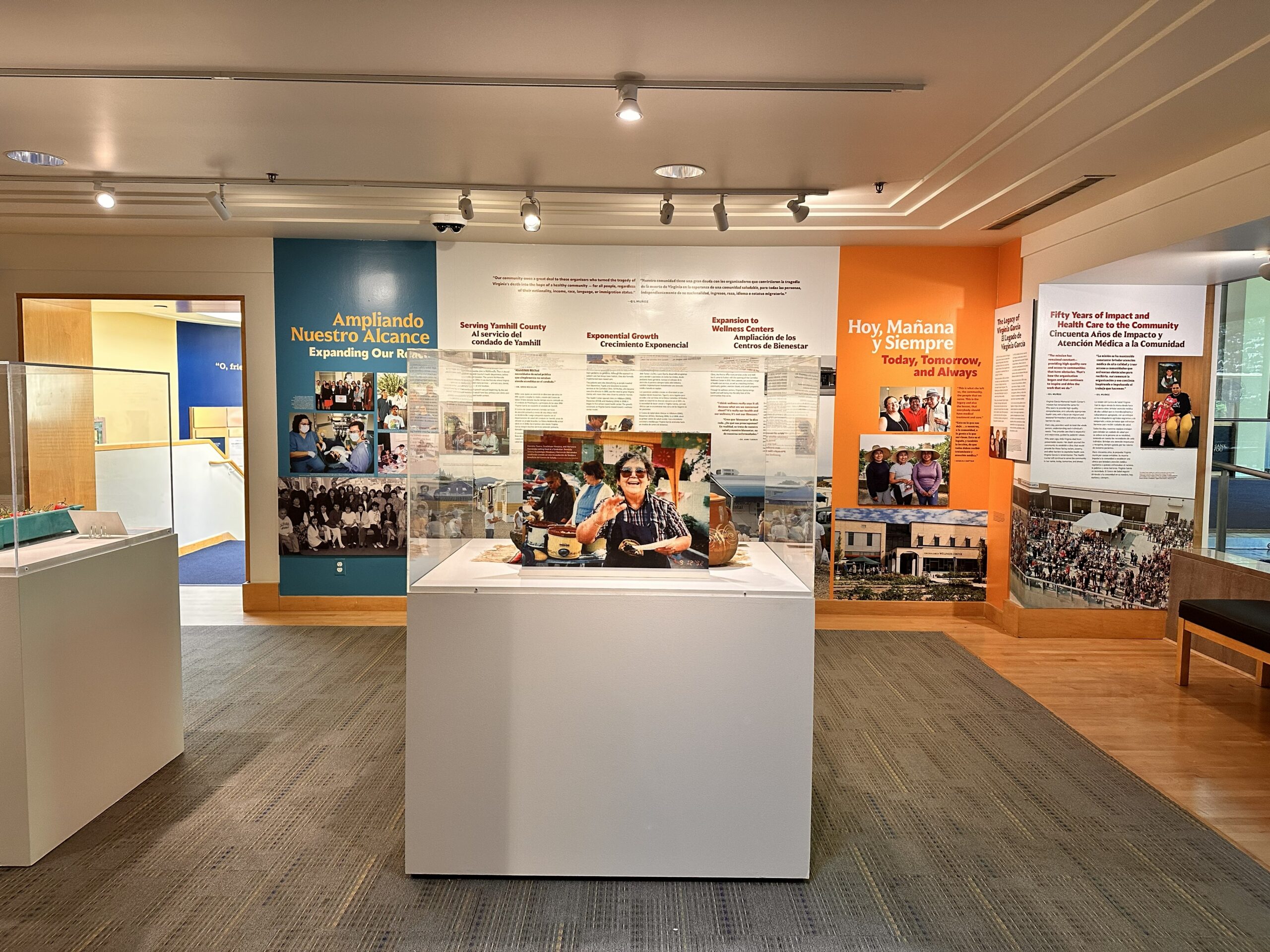
During the research phase of the project, which spanned both the collecting of oral histories and the development of the exhibition, I reviewed materials provided by the health center, such as annual reports, internal newsletters, and a collection of historical materials, mainly photographs, from its early years. I digitized many of these materials for Virginia Garcia. I reviewed articles from newspapers such as the Oregonian and the Rural Tribune. Staff from Centro Cultural, a mission-aligned partner to the health center, also generously shared materials gathered for their own fiftieth anniversary in 2022. Secondary sources provided context for the health center’s broader significance in the histories of the Latine community, farm labor, the Chicano movement, and community health activism in Oregon and beyond.
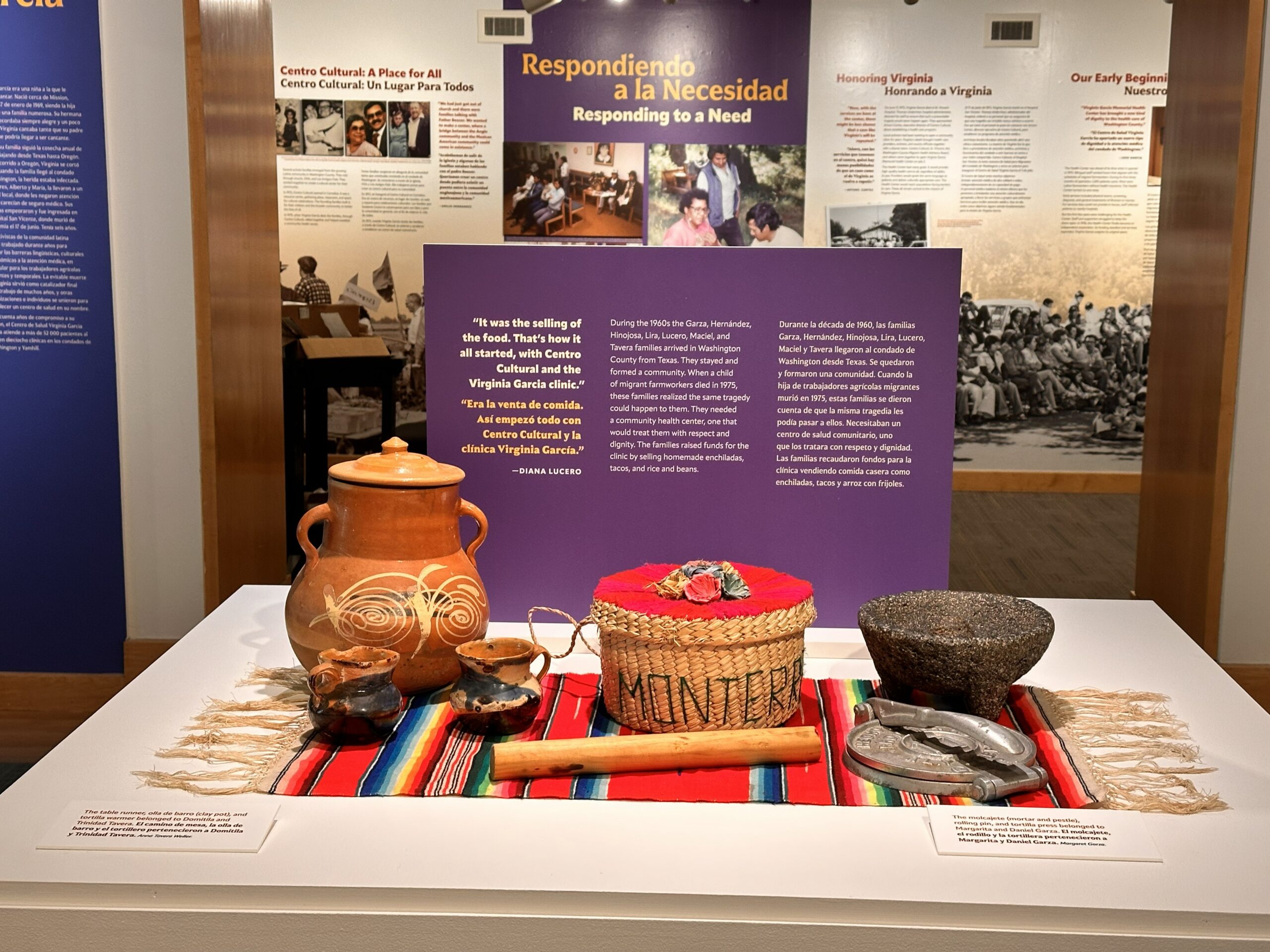
The oral histories and research informed the exhibition’s foundation: that the history of the Virginia Garcia Memorial Health Center is as much a history of the Latine community in Washington County as it is a history of the clinic itself. I collaborated closely with community members to craft the stories told in the exhibition. For example, we conceptualized the objects displayed in the gallery. Rather than showcasing items related to health care, we chose belongings that told powerful stories. One display case included kitchen supplies used to make food sold to support the opening of the health center. Another showed a flat of artificial strawberries to visually demonstrate how many pounds of fruit a migrant farmworker would need to harvest to afford specific health care services.
The final exhibition — Virginia Garcia: Cincuenta Años de Legado e Impacto en Nuestra Comunidad / Virginia Garcia: Fifty Years of Legacy and Impact in Our Community — was presented in Spanish and English. It was on display at the Oregon Historical Society during the spring and summer of 2025.