

By Client Executive Marcia Spicer
Digitization preserves the page. But for many handwritten collections, preservation is only the first step.
A scanned letter, ledger, field note, institutional record, or handwritten form may be safely captured as an image, but the information inside can still be difficult to find. Names, dates, places, decisions, relationships, and stories may remain buried unless someone has the time, budget, and expertise to read through every page manually.
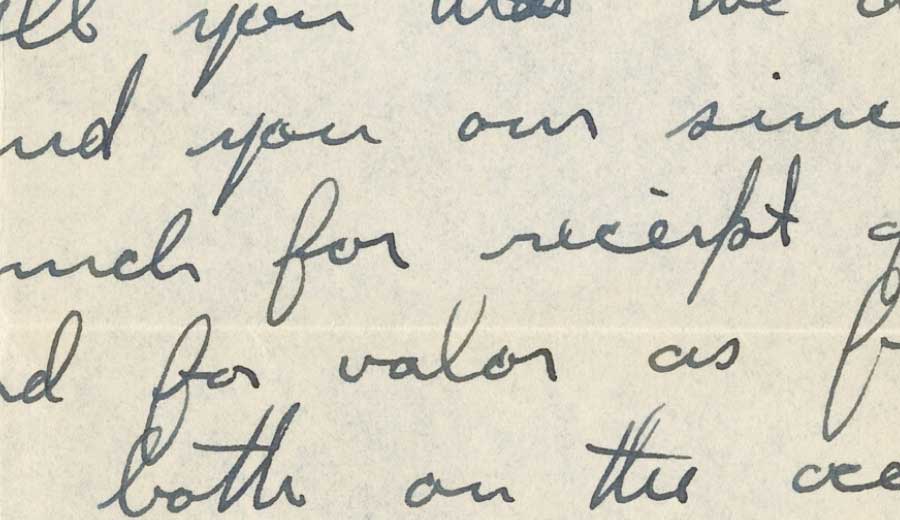
That challenge is what led Anderson Archival to develop Scriptoria, a custom handwriting transcription (HTR) and optical character recognition (OCR) workflow now available through our digitization services. Scriptoria helps turn digitized handwritten and typed materials into searchable resources, including searchable PDFs with embedded text layers and separate text files, while keeping the original image intact as the authoritative record.
Scriptoria is not a public upload tool or a replacement for archivists. It is part of Anderson Archival’s broader service model, built for organizations, institutions, families, and collection stewards who need a practical path from preservation to access.
The Client Challenge That Started the Work
The idea for Scriptoria grew out of a recurring client need.
“Many of our clients were coming to us with the same challenge: they had handwritten materials they wanted to make more accessible, but transcription at scale is extremely labor intensive,” said Farica Chang, Managing Partner at Anderson Archival. “Manual transcription has real value, but it can also be expensive, slow, and out of reach for many collections. We started asking whether the technology available today could help close that gap. Not by replacing the care and judgment that archival work requires, but by making it more practical for more organizations to unlock the information inside their collections.”
For archivists, historical societies, museums, universities, corporate archives, family offices, genealogical researchers, and private collection stewards, this problem is familiar. A collection may be physically preserved and digitally scanned, yet still difficult to search, cite, or study at scale.
A researcher looking for one family name may have to open hundreds or thousands of images. A family office may have letters or ledgers that matter deeply but are not easy to navigate. An institution may have a backlog of handwritten forms, correspondence, or mixed typed and handwritten records that are technically digitized but not very usable.
Scriptoria was created to help address that middle ground: the space between image-only preservation and truly discoverable digital collections.
What Was Missing from Existing Workflows
Handwriting transcription tools already existed when Anderson Archival began developing Scriptoria. But the available workflows did not fully solve the practical problem clients were bringing forward.
“There were other handwriting transcription tools available, but what we were not seeing was a workflow that kept the transcription closely connected to the original image in a practical way,” Chang said. “For researchers and collection stewards, it is not enough to receive a separate text file and then have to hunt back through the image to find the original handwritten passage. We wanted the searchable text to work alongside the image, so users could search the content and still see the original material in context. That connection between discovery and the original record was the gap we wanted Scriptoria to address.”
That distinction matters.
In archival work, the image itself remains essential. The handwriting, layout, markings, edits, and physical characteristics of the page all provide context. A searchable text layer should support discovery, not detach the user from the record.
With Scriptoria, Anderson Archival can create searchable PDFs with embedded text layers, as well as separate text files depending on the client’s needs and project scope. The goal is to make collections easier to search and review while preserving the connection between the text and the original image.
How Scriptoria Works in Plain Language
At its simplest, Scriptoria helps turn scanned handwritten or typed materials into something people can search.
The original image remains intact. A machine-generated text layer is created to make names, dates, places, and other information easier to discover. For users, that can mean searching across pages that previously required manual review one image at a time.
Scriptoria has been tested on a range of materials, including letters, ledgers, field notes, institutional records, handwritten forms, and mixed typed and handwritten collections. The model continues to improve as Anderson Archival refines the workflow and evaluates performance across different types of records.
“Most people are familiar with OCR in the context of printed text,” Chang said. “HTR is similar in purpose, but it is designed for handwritten text, which is much more variable. Handwriting changes from person to person, and sometimes even from page to page. That means the technology has to account for scripts, spacing, abbreviations, ink quality, layout, and image condition in ways that traditional OCR often does not.”
This is why Scriptoria is built into Anderson Archival’s services rather than offered as a detached self-service tool. The condition of the materials, quality of the scan, structure of the files, privacy requirements, and intended use of the output all affect the right approach.
Built as a Service, Not a Standalone Software Product
Scriptoria is currently available through Anderson Archival’s services. Clients are not simply uploading documents into a public platform and hoping for the best result.
That is intentional.
“We were intentional about building Scriptoria as part of a broader archival workflow, not as a detached tool where someone simply uploads files and hopes for the best,” Chang said. “The quality of the image, the condition of the materials, the way files are organized, the metadata, and the client’s ultimate use case all matter. Keeping Scriptoria connected to our digitization services allows us to bring archival judgment into the process instead of treating HTR as a one-click shortcut.”
For some collections, the right deliverable may be a searchable PDF. For others, separate text files may also be useful. Some projects may need metadata support, review workflows, or additional archival services layered in. Others may only need a practical way to make a large handwritten collection keyword searchable for the first time.
That flexibility is part of the value. Scriptoria is not positioned as one universal workflow for every collection. It is one capability within a broader archival process designed around the materials, the client’s goals, and the level of review the project requires.
Responsible Expectations: Searchability, Not Perfection
One of the most important parts of introducing any recognition technology is setting the right expectation.
“We should be honest that machine-generated text is not perfect,” Chang said. “Accuracy depends on the handwriting, the quality of the original material, the scan, the layout, and the intended use of the output. For many projects, a searchable layer creates tremendous value because it helps people find relevant material faster. For projects where the exact wording matters, human review or correction may still be needed. The key is setting the right expectation from the beginning.”
This is especially important for archives, legal records, family history, and research use.
“The original image remains the source of truth,” Chang said. “Scriptoria is meant to improve discovery, not replace the underlying document. The searchable text layer helps researchers locate potentially relevant material more efficiently, but the image itself is still what they should look back to when context, interpretation, or exact wording matters.”
Balancing Innovation with Archival Responsibility
“Our approach to AI is grounded in stewardship,” Chang said. “We believe these tools can create real value, but only when they are used with a clear understanding of their limitations, risks, and appropriate safeguards. For Scriptoria, that means being transparent about what machine-generated text can and cannot do, keeping the original image as the authoritative record, and offering human review when a project requires additional verification. The goal is not to use AI for its own sake. The goal is to use it responsibly to improve access to collections.”
That responsibility also includes data handling. Scriptoria was developed with privacy and security in mind, particularly for private clients and sensitive collections. Anderson Archival does not use client collection materials to train public models.
“Scriptoria is designed to make materials easier to discover and research while still respecting the privacy, security, and integrity of the underlying collection,” Chang said. “That includes keeping client data private, and recognizing that sensitive or high-stakes materials may require human review. Used responsibly, this technology can help bring forward stories, names, and connections that might otherwise remain hidden in handwritten records.”
Why This Matters for Collection Access
For many collections, the difference between image-only digitization and searchable digitization is the difference between storage and use.
A digitized collection may be protected, but if no one can efficiently find what is inside, its value remains limited. Scriptoria is designed to help close that gap.
“Making handwritten and typed materials more searchable helps archivists manage access more practically, helps researchers move faster, and helps collection stewards get more value from the investment they have already made in preservation,” Chang said.
For archivists managing backlogs, Scriptoria does not remove the need for professional judgment. But it can create a better starting point.
“Instead of requiring a fully manual transcription effort before a collection becomes more usable, a searchable text layer can give teams and researchers a better starting point,” Chang said.
And for private clients with large handwritten collections, the shift can be especially meaningful. Keyword search may not have been possible before. Scriptoria can help make family letters, ledgers, personal papers, institutional records, and other handwritten materials easier to explore without requiring a full manual transcription project at the outset.
A Practical Step Toward More Usable Collections
Scriptoria reflects a larger shift in archival work: preservation and access should not be treated as separate goals.
Collections need to be protected. They also need to be usable by the people they are meant to serve. That includes archivists, researchers, families, institutions, and future generations who may not know where to begin unless the collection can meet them halfway.
Scriptoria is Anderson Archival’s practical response to that need. It brings handwriting recognition and OCR into a service-led archival workflow, with privacy, context, and human judgment built into the process.
If your collection is digitized but still hard to search, or if handwritten materials are creating a barrier to access, Anderson Archival can help you evaluate whether Scriptoria belongs in your digitization workflow.