


By Client Executive Marcia Spicer
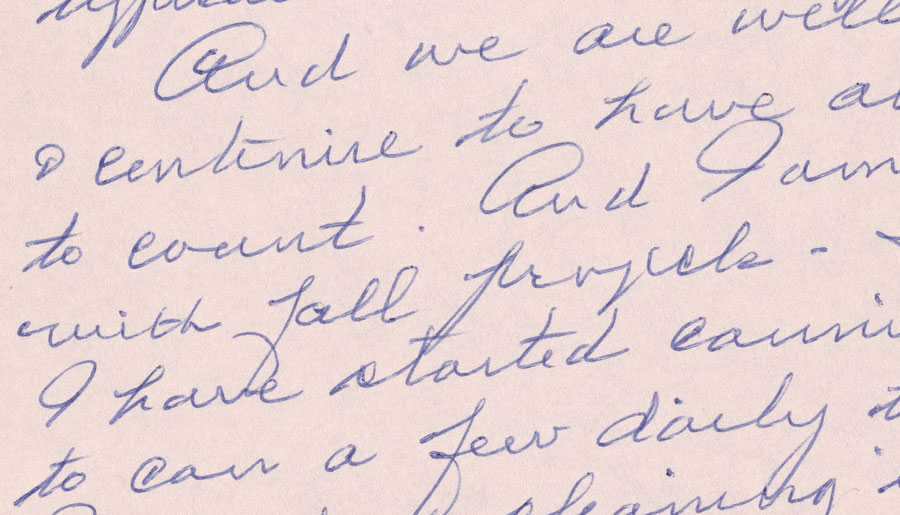
Imagine a room lined with shelves of journals. Decades’ worth. Handwritten pages capturing daily routines, pivotal life decisions, half‑formed ideas, private reflections, and moments that never made it into formal records. These volumes tell a story far richer than dates and milestones—they reveal mindset, growth, and the evolution of a person’s thinking over time.
For many people, these kinds of personal archives exist. They may be made up of journals, letters, notebooks, planners, or annotated books stored in boxes, filing cabinets, or closets. They are deeply meaningful, yet often inaccessible. The very format that makes them intimate also makes them fragile, difficult to search, and nearly impossible to use holistically.
Today, personal archive digitization combined with AI transcription and handwritten text recognition is making it possible to transform handwritten journals into searchable, living archives.
From Physical Burden to Living Archive: Digitizing Personal Journals and Archives
Personal archives tend to grow quietly. A journal here, a notebook there. Over time, they become rooms of boxes or shelves that must be packed, moved, and protected with every life transition. Accessing them usually means setting aside long stretches of time to flip through pages, hoping to stumble upon a specific reference or memory.
High‑quality digitizing services change that dynamic completely.
By converting physical journals and documents into carefully captured digital files, a personal archive shifts from being something you store to something you can use. Instead of worrying about damage, misplacement, or physical deterioration, the content is preserved in a stable, secure digital format. More importantly, it becomes available without requiring hours of manual review.
Digitization is not simply about scanning pages. For handwritten materials especially, image quality, consistency, and archival handling matter. The better the digitization, the more useful every next step becomes.
Transcription and Handwritten Text Recognition: The Bridge Between Images and Insight
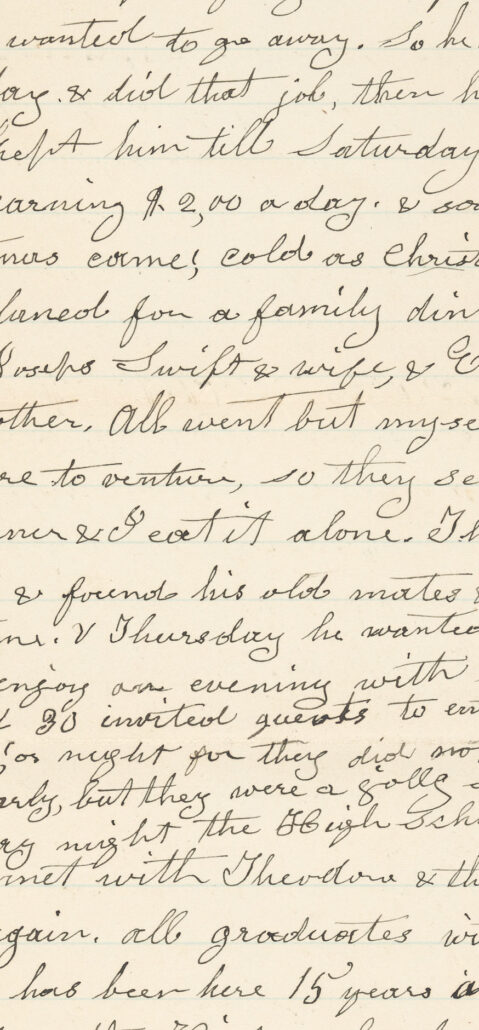
A scanned image, no matter how clear, is still just an image. The real transformation happens when those images are paired with transcription.
AI‑powered handwritten text recognition provides the first critical step in turning a personal archive into something searchable and dynamic. Instead of relying on memory or guesswork, you can search across years of writing for names, places, themes, or recurring ideas.
This does not mean perfection out of the gate. Handwriting varies over time, moods, and mediums. But even imperfect transcription dramatically changes how an archive can be explored. It allows users to move beyond linear reading and begin identifying connections that would otherwise remain hidden.
Transcription also reduces friction. What once required hours of page‑turning can become minutes of discovery.
Training AI on Digitized Journals and Personal Writing
Once personal writing has been digitized and transcribed, a new possibility emerges: training an AI model on the archive itself.
When transcripts from journals, letters, or notes are provided to an AI tool, that system can begin to recognize patterns across the writing. With enough material, AI can reflect back recurring themes, shifts in thinking, evolving priorities, and long‑term patterns that are nearly impossible to perceive while living them.
This is not about replacing memory or interpretation. It is about augmenting human reflection.
For example, an AI trained on decades of journals might help answer questions such as:
- How did my thinking change during college?
- What themes consistently resurfaced over time?
- When did the idea for a novel first appear, and how did it evolve?
- What patterns exist in my emotional responses?
The value lies not in prediction, but in perspective. Personal writing becomes a dataset for self‑understanding—something that can be revisited, explored, and learned from in new ways.
More Than Personal: Expanding the Scope of Archives
While this approach is powerful for individuals, it is not limited to personal use.
The same methods apply to historical figures, family ancestors, and community collections. Letters, diaries, and notebooks that once required specialized access can become searchable resources that reveal context, voice, and lived experience. For historians, genealogists, and families alike, this opens doors to interpretation that go far beyond surface facts.
When handled responsibly, AI paired with historical document digitization can assist in surfacing connections across large bodies of writing without stripping away nuance. The key is grounding these tools in high‑quality digitization and clear archival intent.
Why Professional Digitization Quality Matters for AI and Archives
Not all digitization and AI applications are equal. Low‑quality scans limit transcription accuracy. Poor organization makes training less effective. And applying AI without context or care can flatten meaning rather than enhance it.
That is why the foundation of secure, professional digitization matters.
This ensures consistent image quality, careful handling, and structured organization—critical foundations for accurate handwritten text recognition and long-term archival use. It respects the original artifact while making it usable in a digital environment. When paired with AI intentionally—rather than as a novelty—it becomes a powerful extension of archival preservation.
A New Way to Engage with the Past
Personal writing has always held value. What is changing is our ability to engage with it fully.
Digitization removes physical barriers. Transcription unlocks access. AI introduces perspective. Together, they transform static collections into living archives—resources that can inform, reflect, and deepen understanding across time.
For anyone sitting on boxes of journals, letters, or handwritten notes, the question is no longer whether they matter. It is how much more they might reveal when given the tools to speak across decades.
Frequently Asked Questions
Can’t Find What You’re Looking For?
We’d Love to Chat With You
What is handwritten text recognition?
Handwritten text recognition is an AI technology that converts handwritten content into searchable, machine-readable text, making journals and letters easier to explore digitally.
Can AI accurately transcribe handwritten journals?
Accuracy depends on handwriting quality, consistency, and digitization standards. High-quality scans significantly improve AI transcription results.
Is it safe to digitize personal journals and letters?
When handled by professional archival digitization services, materials are digitized securely with careful handling and privacy protections.